Higher Oil Prices Reach Beyond the Gas Pump
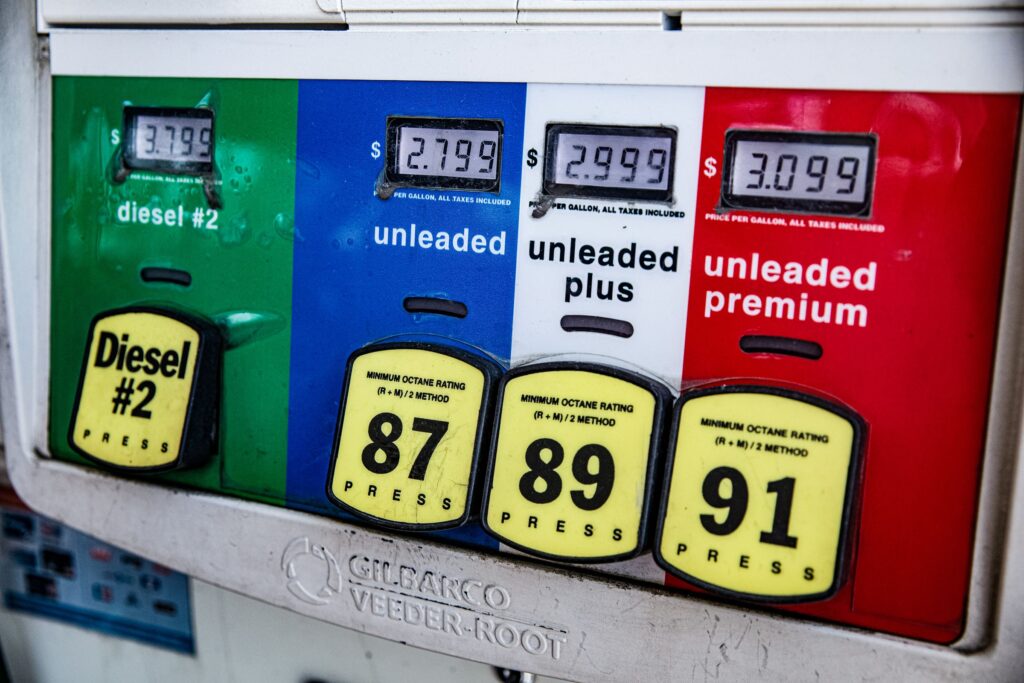
The numbers first: Brent crude was about $98 a barrel on 6 November 2026, after closing near $113 on 30 October; U.S. regular gasoline averaged $4.15 a gallon in EIA’s 2 November reading, up $1.13 from a year earlier; and the Bureau of Labor Statistics put September’s gasoline index up 34.2% on the year. When Reuters reported on 21 and 22 October that crude near $110 was seeping into heating, groceries and borrowing costs, it was describing a real chain of costs. Here is what the official data shows for each link two and a half weeks later, and where the evidence is thin.
Key takeaways
- Crude has fallen: Brent was down more than 12% in the week to 6 November but was still about $98, and EIA’s retail gasoline and diesel figures only run through 2 November.
- Heating is not one story. EIA’s winter outlook has heating-oil homes (about 3% of U.S. households, mostly in the Northeast) facing fuel prices about 21% higher, while natural gas and propane homes (about half) are expected to spend less.
- Groceries are the lagging link: food at home was up just 1.8% on the year in September’s CPI, below the 3.7% headline.
- The Fed held its rate at 3.75% to 4% on 28 October, with two members voting for a hike. Its statement did not mention energy prices.
- Mortgage rates are higher than a year ago (7.18% against 6.22%), but oil is only one possible reason.
Where prices stand, with dates
| Measure | Latest reading | Date | Source |
|---|---|---|---|
| Brent crude | about $98.32 a barrel | 6 Nov 2026 | Trading Economics (market data) |
| Brent crude (January contract) | $113.43 close, then $103.60 on 3 Nov | 30 Oct, 3 Nov | GlobalOilShock weekly report, citing Reuters and ICE data |
| U.S. regular gasoline | $4.153 a gallon (up $1.134 from a year ago) | Week of 2 Nov | EIA |
| U.S. on-highway diesel | $6.292 a gallon (up $2.539 from a year ago) | Week of 2 Nov | EIA |
| Consumer prices, all items | +3.7% on the year; +0.6% on the month | September 2026 | BLS |
| 30-year mortgage rate | 7.18% (6.22% a year earlier) | 5 Nov 2026 | Freddie Mac |
This week’s oil price moves track diplomacy and shipping news. Reporting this week describes traders weighing the risk of renewed U.S.-Iran military action against hopes of a deal, attacks on tankers near the Strait of Hormuz, and Gulf crude shipments that have recovered to close to pre-war levels with freight costs still high. I am not going to guess where it goes next. EIA’s gasoline and diesel figures run only through 2 November, so they predate most of that crude drop.
To make the gasoline number concrete, my arithmetic: $1.134 extra on a 12-gallon fill-up is about $13.61, which is roughly $708 a year at one fill-up a week. That is an illustration, not a statement about your car.
How oil reaches the rest of the budget
Heating
EIA’s 2026-27 Winter Fuels Outlook, released 6 October, is the best primary read. It expects households that mainly heat with natural gas or propane, about half of U.S. households, to spend less than last winter. Households using electricity or heating oil are expected to spend more. Heating oil shows the biggest change: fuel prices about 21% higher, partly offset by milder Northeast weather, affecting about 3% of households, mostly in the Northeast. Wholesale electricity is expected to average $52 a megawatt-hour in 2026, up 11%. EIA also noted East Coast distillate inventories were 32% below the five-year average in September, and forecast them to stay 20% to 30% below through winter.
Reuters cited the National Energy Assistance Directors Association saying New York heating bills could rise 47% from last year. That is a bigger number than anything in EIA’s national outlook, which covers every fuel and region. It is a local figure and I could not check how it was built, so read it as a warning for one place, not a national forecast.
Groceries and packaging
The pass-through logic is sound: trucks run on diesel, plastics come from oil or gas, and fertilizer is made from natural gas. Reuters quoted a consultancy putting packaging at 5% to 15% of a grocery product’s manufacturing cost, and the UN Food and Agriculture Organization expects global food inflation to speed up into 2027, per Reuters. The September CPI does not show it yet. Food overall was up 2.5% on the year and food at home 1.8%, against 3.7% for everything. Energy was up 20.4% on the year, gasoline 34.2% and fuel oil 74.2%. Treat groceries as a watch item, not an established loss.
Borrowing costs
The Federal Reserve voted 10 to 2 on 28 October to keep its target range at 3.75% to 4%. Lisa Cook and Beth Hammack wanted a quarter-point increase. The statement says inflation remains elevated and does not mention energy. Freddie Mac’s weekly average for a 30-year fixed mortgage was 7.18% on 5 November, down from 7.24% a week earlier. By my arithmetic, principal and interest on a $300,000 loan at 7.18% is about $2,032 a month, against about $1,841 at 6.22%, a difference of $191. Reuters links energy-driven inflation to higher rates, but many forces move mortgage rates, so I would not blame oil for that $191.
The pass-through scorecard, and what to watch
| Channel | What the data shows so far | Strength of evidence |
|---|---|---|
| Gasoline and diesel | Up $1.13 and $2.54 a gallon on the year (EIA, 2 Nov) | Direct, current |
| Heating oil homes | Fuel about 21% higher (EIA outlook) | Direct, narrow group |
| Natural gas and propane homes | Lower expected spending (EIA outlook) | Direct, but a forecast |
| Electricity | CPI +4.4% on the year (September) | Direct, cause not isolated |
| Groceries | Food at home +1.8% (September) | Not showing yet |
| Mortgages and rates | Rates up on the year; Fed statement silent on energy | Indirect |
Checklist for tracking this yourself:
- EIA’s weekly gasoline and diesel page (next release 10 November).
- EIA’s Short-Term Energy Outlook, next release 10 November.
- BLS’s October CPI, for gasoline, fuel oil and food at home, when published.
- Freddie Mac’s weekly mortgage rate survey.
- Your own utility bill and fuel delivery receipts for the last two winters.
Frequently asked questions
Is oil still at $110?
Not as of 6 November. Brent was about $98 then, after a drop of more than 12% in a week. Reuters had it near $110 around 21 October, and the January contract closed at $113.43 on 30 October. It has moved a lot day to day.
Will my heating bill rise?
It depends on the fuel. EIA expects higher heating-oil and electricity costs, and lower spending for natural gas and propane households, assuming typical weather.
Are grocery prices rising because of oil?
Not visibly in September’s CPI. Reuters and the FAO describe the risks; the data lags.
Do higher oil prices push up my mortgage rate?
Possibly through inflation and central bank policy, but rates reflect many factors. Ask a lender or housing counselor about your own loan.
Before you decide
None of this is a reason to change your plans, and it is not a forecast. It is a way to check which parts of the energy story actually reach your costs. If you heat with oil, the delivery price and tank level matter more than a headline. If you carry a variable-rate loan, a housing counselor or lender can walk through your terms. Recheck after the 10 November EIA releases and the next CPI report.
Sources
- From groceries to home loans, high oil prices permeate daily life (Reuters, via MarketScreener)
- Gasoline and Diesel Fuel Update (U.S. Energy Information Administration)
- EIA expects a mixed picture for winter fuel costs this year (U.S. Energy Information Administration)
- Consumer Price Index news release, September 2026 (U.S. Bureau of Labor Statistics)
- Federal Reserve issues FOMC statement, October 28, 2026 (Board of Governors of the Federal Reserve System)
- Mortgage Rates, Primary Mortgage Market Survey (Freddie Mac)
- Brent crude oil price and news (Trading Economics)
- Oil price, week 45/2026 (GlobalOilShock)
Last updated: November 2026. This article is general information, not financial advice.