PayPal and LianLian Add Wallet Payouts for Creators and Contractors
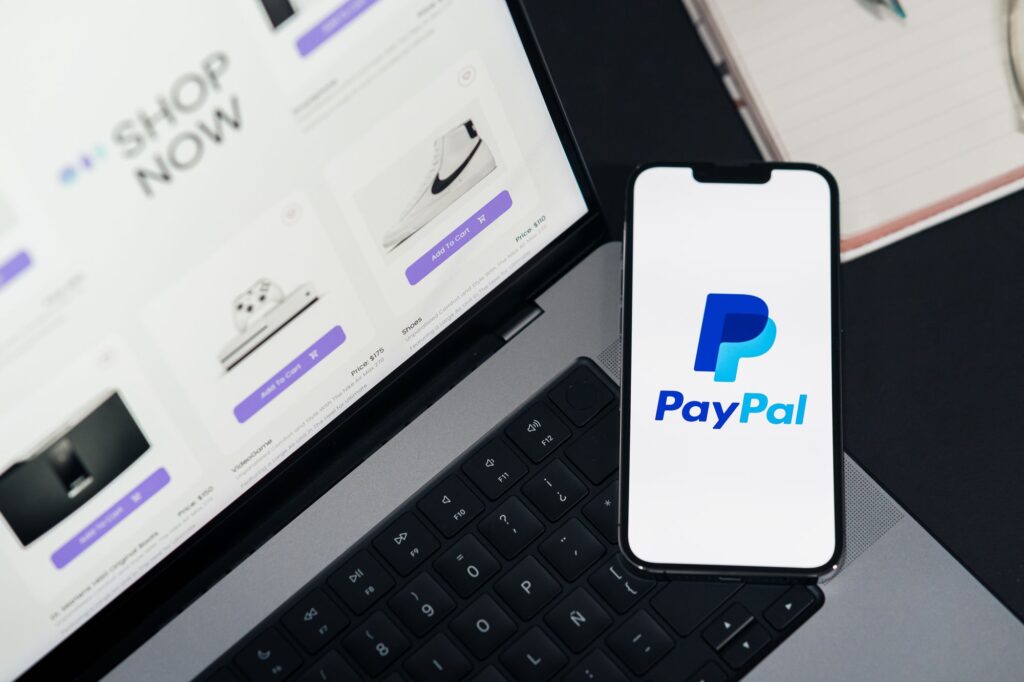
On 22 October 2026, LianLian Global, a cross-border payments company, said its marketplace, social-commerce and eCommerce clients can now pay sellers, creators and contractors into PayPal accounts in 96 markets and, inside the United States, into Venmo. The service runs on PayPal Payouts, a product PayPal already sold directly. So this is plumbing, not a new app, and you cannot sign up for it yourself. As of 8 November 2026 I found no follow-up from either company on pricing or rollout dates, and the release itself quotes no fees.
Key takeaways
- LianLian’s platform clients can now send payouts to PayPal wallets (96 markets) and Venmo (US recipients only). It is a business-to-payee tool, not a checkout button.
- The release gives no fees and no delivery times. PayPal’s own pages say the sender pays and the recipient pays nothing to receive, but conversion costs apply.
- PayPal’s published US schedule for Payouts is 2% with a $1 cap domestically and a $20 cap internationally, plus a 4% conversion spread. Whether a LianLian client pays those rates is not stated.
- Unclaimed payouts expire after 30 days and go back to the sender.
- Whether you get this option at all is your paying platform’s decision.
What was actually announced
LianLian’s release is dated 22 October 2026, issued in the evening US Eastern time, which is why some outlets show 23 October. It describes three things: Pay to PayPal (payouts to PayPal account holders in 96 markets using only an email address or phone number), Pay to Venmo (US domestic only), and PayPal Payouts for Platforms (batch disbursements to many sellers or creators at once). LianLian’s Deputy CEO of US, Sandra Lam, is the named executive. PYMNTS, a payments trade outlet, covered it on 23 October and also found no pricing in the announcement.
The pitch is the usual one: skip the check run, the postage and the routing numbers. The release gives no figures for how much time or money that saves, so treat it as a claim, not a measurement.
| Item | What the release says | What it leaves out |
|---|---|---|
| Reach | PayPal accounts in 96 markets; Venmo in the US | Which markets your platform switches on |
| Method | Email address or phone number | Whether you must open or confirm an account first |
| Currency | LianLian’s FX and compliance sit behind it | The exchange rate or spread you would get |
| Cost | Says it saves time and money | Any fee, to anyone |
| Speed | Described as fast, small payouts | A delivery time for any country |
The release also leans on statistics. Brands are expected to spend $32.6 billion on creators in 2026, and about 50 million people create content professionally or semi-professionally. Both are credited to a Gigapay report I did not open, so all I can say is that LianLian cited it. It puts PayPal at more than 400 million active accounts at the end of the second quarter of 2026. PayPal’s own third-quarter filing, dated 27 October 2026, reports 440 million active accounts, up 0.6% on a year earlier, and $487.1 billion in total payment volume, up 6%.
What it means if a platform pays you
If you sell, create or contract through a marketplace or social-commerce platform, the practical change is a possible new payout choice. Nothing happens until your platform is a LianLian client and turns the PayPal or Venmo route on. The release names no platforms.
PayPal’s developer FAQ adds the details that matter at the receiving end. The recipient’s email must be confirmed with PayPal before a payment can land, and it should then show up within minutes. If unclaimed, it expires after 30 days and returns to the sender. Recipients pay no fee to receive, whatever their account type. The LianLian release says the service works with or without an existing PayPal or Venmo account. Those statements do not obviously match, so ask the platform how a new payee gets set up.
Venmo is the narrow door. PayPal’s documentation says Venmo can be a payout method only for recipients in the United States.
PayPal’s pages also disagree on country counts. The release says Payouts is live in 96 markets and supports 24 currencies. PayPal’s developer FAQ still says more than 156 countries and more than 23 currencies, while its supported-features page lists 93 entries and 20 currencies for automatic conversion. I cannot reconcile those from outside, so I use 96 only as LianLian’s number. Other limits from PayPal: each payment can be up to $20,000 or its local equivalent by default, different currencies need separate payout files, and Argentine pesos, Brazilian reais and Malaysian ringgit cannot be converted.
The fee math (using PayPal’s published schedule)
The sender pays the Payouts fee, so most of the cost shows up on the platform’s side. Platforms can still pass costs on through lower rates, payout minimums or withdrawal rules. PayPal’s US merchant fee page, last updated 4 November 2026, lists the rates below for Payouts. They are PayPal’s own published rates; the LianLian release does not say a LianLian client pays them, and negotiated rates may differ. The dollar examples are my arithmetic, not quotes from any company.
| Payout | PayPal’s published rule | Fee on $500 | Fee on $2,000 |
|---|---|---|---|
| US domestic | 2%, capped at $1.00 | $1.00 | $1.00 |
| US domestic via Payouts API (USD) | Flat $0.25 | $0.25 | $0.25 |
| International (USD) | 2%, capped at $20.00 | $10.00 | $20.00 |
| Currency conversion | 4.00% spread when the recipient gets a different currency | $20.00 | $80.00 |
On a cross-border payout in a different currency, the conversion spread, not the 2% fee, is the biggest line. The page also says another amount may be disclosed during the transaction, so treat the table as a starting point.
A checklist before you accept a wallet payout
- Ask which payout countries the platform supports and whether yours is one.
- Ask who pays the fee and whether anything is deducted before the money is sent.
- Ask whether the payout is converted before sending, and at what rate.
- Check that the email or phone number on file matches the wallet you will use, and that it is confirmed.
- Set a reminder for the 30-day expiry on unclaimed payouts.
- Find out what the wallet charges to withdraw to your bank or card. That varies and is not covered by the release.
- Keep payout notices for your records. Tax treatment of the income is a question for a tax professional.
Frequently asked questions
Can I sign up for this directly?
No. It is a service for LianLian’s business clients. You would only see it if a platform that pays you uses LianLian and offers it.
Do I need a PayPal account to be paid?
The release says it works with or without an existing PayPal or Venmo account. PayPal’s FAQ says the email must be confirmed with PayPal before payment arrives. Ask the platform what a first-time payee has to do.
Does Venmo work for payouts outside the US?
No. PayPal limits Venmo as a payout method to recipients in the United States. The PayPal route covers the wider list of markets.
Who pays the fee?
PayPal’s developer FAQ says the sender pays and the recipient pays nothing to receive. Conversion and withdrawal costs can still land on you, so ask about both.
Before you decide
If a platform offers you a PayPal or Venmo payout, compare it with your other options on three numbers: what is deducted before sending, what you lose in conversion, and what it costs to move the money to your bank. An option that is free to receive can still cost 4% on the way in. Treat the 96-market figure as a ceiling, not a guarantee, and check again if your platform publishes its own details.
Sources
- LianLian Global and PayPal Power Cross-Border Payouts for Social Commerce, Marketplace, and eCommerce Customers (LianLian Global, via PR Newswire)
- LianLian Taps PayPal and Venmo to Speed Up Cross-Border Payouts (PYMNTS)
- Payouts frequently asked questions (PayPal Developer)
- Countries and supported features for Payouts (PayPal Developer)
- Merchant fees (PayPal)
- PayPal Holdings, Form 8-K, third-quarter 2026 earnings release (U.S. Securities and Exchange Commission)
Last updated: November 2026. This article is general information, not financial advice.